
Uttar Pradesh Police has initiated the process to add Section 198 of the BNS to an FIR against two electoral registration officers and a computer operator in Pilibhit. This action follows alleged irregularities in the voter list of the Pilibhit Sadar Assembly constituency, where an inquiry revealed missing application forms and identical EPIC numbers for different voters. The Election Commission had earlier suspended the officers and directed the addition of the BNS section.

The Bombay High Court in Goa ruled that provisions of the Representation of the People Act and Registration of Electors Rules remain in force during a Special Intensive Revision of electoral rolls. The court directed authorities to include six members of a Goa family in the voter list, criticising the Election Commission's system for rejecting Form 8 applications for residence change, stating it denied citizens their right to vote and amounted to suspending legal provisions.

The Election Commission has provided a fresh opportunity for voters in seven states marked as Absent, Shifted, Dead, or Duplicate (ASDD) to be included in the final electoral rolls. This decision comes amidst allegations of disenfranchisement and aims to facilitate the inclusion of electors whose enumeration forms were not returned during the Special Intensive Revision exercise.

The Election Commission of India has revised instructions for the Special Intensive Revision of voter rolls, allowing voters served notices for "No Mapping" or "Logical Discrepancy" categories to avoid physical appearance. Booth Level Officers will collect documents at residences, and submissions can also be made via WhatsApp or during special camps, ensuring a more accessible process for electors.
The Election Commission has suspended two electoral registration officers (EROs) in Pilibhit, Uttar Pradesh, for alleged irregularities in the electoral roll. The EC also directed the addition of a penal provision to an existing FIR against them and a computer operator. This action follows complaints from opposition parties about large-scale manipulation and an inquiry revealing misuse of login IDs for voter detail changes without proper documentation.

The Election Commission of India has told the Delhi high court that two voters, whose names were deleted from the electoral rolls after they could not complete the enumeration process during the Special Intensive Revision in the national capital, can fill Form 6 for redressal of their grievance.

Maharashtra's Chief Electoral Officer has formally requested the Election Commission to modify the ECINet software, seeking greater discretion for Electoral Registration Officers in addressing over 2 crore voter discrepancies.

Maharashtra's Chief Electoral Officer has allowed voter documents via WhatsApp for the Special Intensive Revision (SIR) exercise, with Block Level Officers (BLOs) conducting home verifications. This development comes amidst controversy surrounding the Election Commission and its Chief, Gyanesh Kumar, over alleged unilateral decisions regarding the SIR, which opposition parties claim dilute the powers of Electoral Registration Officers. The deadline for claims and objections has been extended to October 12.

The draft electoral roll for Uttar Pradesh, published on Tuesday, includes 13.58 crore voters, marking an increase of over 18 lakh voters since April. The revision, with January 1, 2027, as the qualifying date, aims to include new eligible citizens and remove duplicate or deceased entries. Citizens can submit claims and objections until December 16, with the final roll to be published on January 4, 2027. Special camps and online facilities are available for verification and updates.
The Election Commission of India has introduced new restrictions on the number of Form 7 applications an individual can submit, both online and offline. This move aims to prevent bulk or malicious attempts to remove legitimate voters from electoral rolls and streamline the objection process, especially after reports from states like Karnataka and Odisha.

Trinamool Congress leader Saket Gokhale has accused the Election Commission of India (ECI) of withholding details about the software and algorithm used for the Special Intensive Revision (SIR) of electoral rolls. Citing an RTI response, Gokhale highlighted the ECI's claim that the information relates to "commercial confidence, trade secrets and intellectual property matters," raising concerns about transparency in the electoral process.
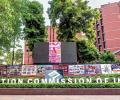
The Election Commission has clarified that its ECINet platform is decentralised, with statutory functions performed only by designated officials, not headquarters staff. This comes after concerns were raised about the centralisation of electoral roll databases. The EC also defended the legality of an additional declaration sought from new voters during the Special Intensive Revision, citing unanimous commission approval and a Supreme Court judgment.

India's Election Commission's centralised voter database systems, ERONET and ECINet, are under scrutiny following concerns raised by Election Commissioners Sukhbir Singh Sandhu and Vivek Joshi regarding the centralisation of electoral rolls and control available to state election officials. The article explains how these systems work and why they are currently in the news.

Karnataka's final electoral roll, published on Tuesday, shows a significant reduction of nearly one crore voters following the Special Intensive Revision (SIR) process, bringing the total count to 4.55 crore from 5.54 crore.

The Bombay High Court's Goa bench has ruled that draft electoral rolls cannot be the sole basis for deleting names from voter lists, asserting that administrative software cannot supersede statutory laws. The court questioned the Election Commission of India's authority to delete voters without a hearing, highlighting concerns over the ERONET system's limitations and its potential to disenfranchise citizens.

Uttar Pradesh Chief Electoral Officer Navdeep Rinwa clarified that the Election Commission's database does not store voter religion information, refuting claims of a conspiracy to target specific communities. This statement comes after Chief Minister Yogi Adityanath's remarks about "missing" Hindu voters and subsequent allegations from the Samajwadi Party. Rinwa explained that any analysis of voter religion by external parties is based on publicly available voter lists and software tools, not EC data.

The Election Commission on Monday defended its decision to conduct the Special Intensive Revision (SIR) of electoral rolls in the Supreme Court, saying the exercise was undertaken in accordance with the law and the three orders on its roll-out were approved unanimously by the Commission's three members.

The Election Commission of India has announced decisions addressing concerns raised by two election commissioners, Sukhbir Singh Sandhu and Vivek Joshi, over the past 10 months. These issues included changes to voter registration forms, access to the electoral roll database, the handling of Goa's 97 voters, communications issued without full commission approval, oversight of the IT division, and appeals against voter restoration. The EC has provided responses and outlined steps to resolve these internal disputes and improve transparency and compliance.

The Delhi poll body has issued notices to several prominent voters, including Chief Minister Rekha Gupta and AAP supremo Arvind Kejriwal, for discrepancies in their enumeration forms during the ongoing Special Intensive Revision (SIR) exercise. While Gupta's entry has been validated, millions of other voters, including other political figures, have received notices for issues like age-related mismatches or being unmapped with previous SIR records, requiring them to submit documents by October 29.

Congress leader Rahul Gandhi and other INDIA bloc leaders have moved the Supreme Court seeking permission to submit 48 written questions to the Election Commission regarding its decision-making process for the nationwide Systemic Improvement of Electoral Rolls (SIR). The plea aims to get sworn responses from EC officials on alleged voter exclusions and changes to online registration systems, questioning the transparency and collective decision-making within the EC.
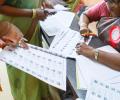
The Election Commission has announced a Special Summary Revision of electoral rolls in 17 states and Union territories, including those facing assembly polls next year. This initiative aims to enrol new voters, correct existing entries, and enhance the accuracy of voter lists, with January 1, 2027, set as the qualifying date.

The Supreme Court has expressed concern to the Election Commission regarding the "almost mechanical" issuance of notices under the Special Intensive Revision (SIR) exercise in Delhi, urging additional safeguards and clarification on "logical discrepancy" criteria. The court is hearing a petition challenging the EC's process, which has seen millions of voters receive notices, raising practical difficulties and concerns about potential disenfranchisement.

The Delhi Chief Electoral Officer's office has issued notices to over 33 lakh voters, including former deputy prime minister LK Advani, External Affairs Minister S Jaishankar, and former vice-president Jagdeep Dhankhar, over discrepancies in their electoral roll details. These notices are part of the Special Intensive Revision (SIR) exercise, primarily due to details not matching with the 2002 SIR. Despite concerns raised by some politicians, officials assure that no names will be deleted without due verification and an opportunity for voters to respond.

Goa Forward Party chief Vijai Sardesai has alleged that Nepalese nationals were added to the state's electoral rolls during the Special Intensive Revision (SIR) and that voters were illegally shifted between constituencies. He has demanded an impartial investigation into these alleged irregularities, calling for deletion of illegal entries and action against those responsible.

Activists Prashant Bhushan, Anjali Bharadwaj, Yogendra Yadav, and Neha Bora have raised serious questions about the Election Commission's decision-making process for the nationwide Special Intensive Revision (SIR) of electoral rolls. They allege contradictions in the EC's statements, lack of transparency regarding decisions, concerns over centralisation of the electoral database, and unauthorised changes to Form 6, calling for greater accountability and disclosure of records.

The Election Commission of India clarified to the Bombay High Court that the absence of a voter's name from a draft Special Intensive Revision (SIR) roll does not equate to deletion, as SIR is a fresh preparation of the electoral roll. This clarification came during a hearing on a writ petition filed by a Goa resident whose family's names were missing from the SIR roll. The court has reserved its verdict.
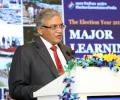
A petition has been filed in the Supreme Court challenging Chief Election Commissioner Gyanesh Kumar over alleged statutory duty violations and the controversial deletion of 13 crore voters during the Special Intensive Revision of electoral rolls, claiming decisions were made without the concurrence of other election commissioners.
Former RBI Governor Bimal Jalan, ex-IAF Chief NAK Browne, and other prominent figures in Delhi have received notices regarding discrepancies in their voter details during the ongoing Special Summary Revision (SIR) of the electoral rolls. Over 33 lakh electors have been identified for such notices, with a deadline of September 30 for responses.

Sita Ram, who left his family 35 years ago to avoid burdening them with his polio treatment costs, was reunited with his brother Dalbir in Jind, Haryana. The reunion happened during the Special Intensive Revision of electoral rolls in Punjab, which required Ram to obtain his School Leaving Certificate from his native village.
The Election Commission has informed the Supreme Court that over 37 lakh appeals concerning deletions or inclusions in West Bengal's electoral rolls remain pending under the Special Intensive Revision. The apex court-appointed tribunals have disposed of only a fraction of the 38.20 lakh appeals filed, prompting the Supreme Court to seek data and a plan for streamlining the adjudication process.

Former civil servants and rights activists have issued a "people's impeachment" notice demanding the resignation of Chief Election Commissioner (CEC) Gyanesh Kumar. They allege six charges against him, including undermining the Election Commission's functioning, mass disenfranchisement through Special Intensive Revision (SIR) of electoral rolls, and compromising political impartiality. The group, including G K Pillai and Najeeb Jung, was prevented from submitting the notice at the EC office.

The Election Commission of India has defended its Special Intensive Revision (SIR) of voters' lists, asserting that differing views among Commissioners are a normal part of deliberations and all orders carry full legal sanction, following reports of two Commissioners red-flagging issues.

More than 2.06 crore electors, representing 21.14 per cent of Maharashtra's previous voter base, have been excluded from the draft electoral roll following a Special Intensive Revision (SIR) due to reasons like being untraceable, deceased, or having shifted residences.

A political controversy has erupted over the inclusion of BJP Rajya Sabha MP Raghav Chadha's name in Delhi's electoral rolls. The Aam Aadmi Party (AAP) has alleged procedural irregularities, questioning how his name appeared in the Rajinder Nagar constituency's voter list despite the draft rolls showing fewer entries. Poll officials confirm Chadha's name was added through the updation process after being removed from Punjab's rolls, while Chadha dismisses AAP's claims as a 'bitter ex' reaction.
The Election Commission of India is conducting a special intensive revision of the electoral roll in Bihar, with over 6.60 crore electors expected to be included in the draft roll.

The Election Commission has informed the Supreme Court that voters previously enrolled but missing from draft electoral rolls can re-apply via Form 6 without facing prosecution. This clarification aims to allay fears and ensure eligible citizens are not deprived of their right to vote, while also addressing concerns about Absent, Shifted, Dead, or Duplicate (ASDD) voters.

The Delhi High Court has ruled that Booth Level Agents (BLAs) of political parties are not liable for false details in electoral enumeration forms that cannot be personally verified. The court clarified that BLAs are only responsible for verifiable information, such as an elector's photograph, and struck down the Election Commission of India's mandate requiring BLAs to provide personal undertakings for all details.

The Election Commission has revised the schedule for the Special Intensive Revision of electoral rolls in Maharashtra, Andhra Pradesh, Haryana, Telangana, Nagaland, and Delhi, extending deadlines for claims, objections, and final publication dates following requests from chief electoral officers.

The controversy surrounding actor Imran Khan's participation in a Mumbai protest, and BJP leader Kirit Somaiya's demand for his deportation, raises critical questions about the legal rights of Overseas Citizen of India cardholders to engage in political dissent and the grounds for their expulsion from India.

West Bengal's Chief Electoral Officer is reviewing CCTV footage following allegations by the Trinamool Congress that a BJP representative improperly submitted voter enrolment forms. The investigation aims to address concerns about potential violations of electoral regulations and ensure the integrity of the voter list.
